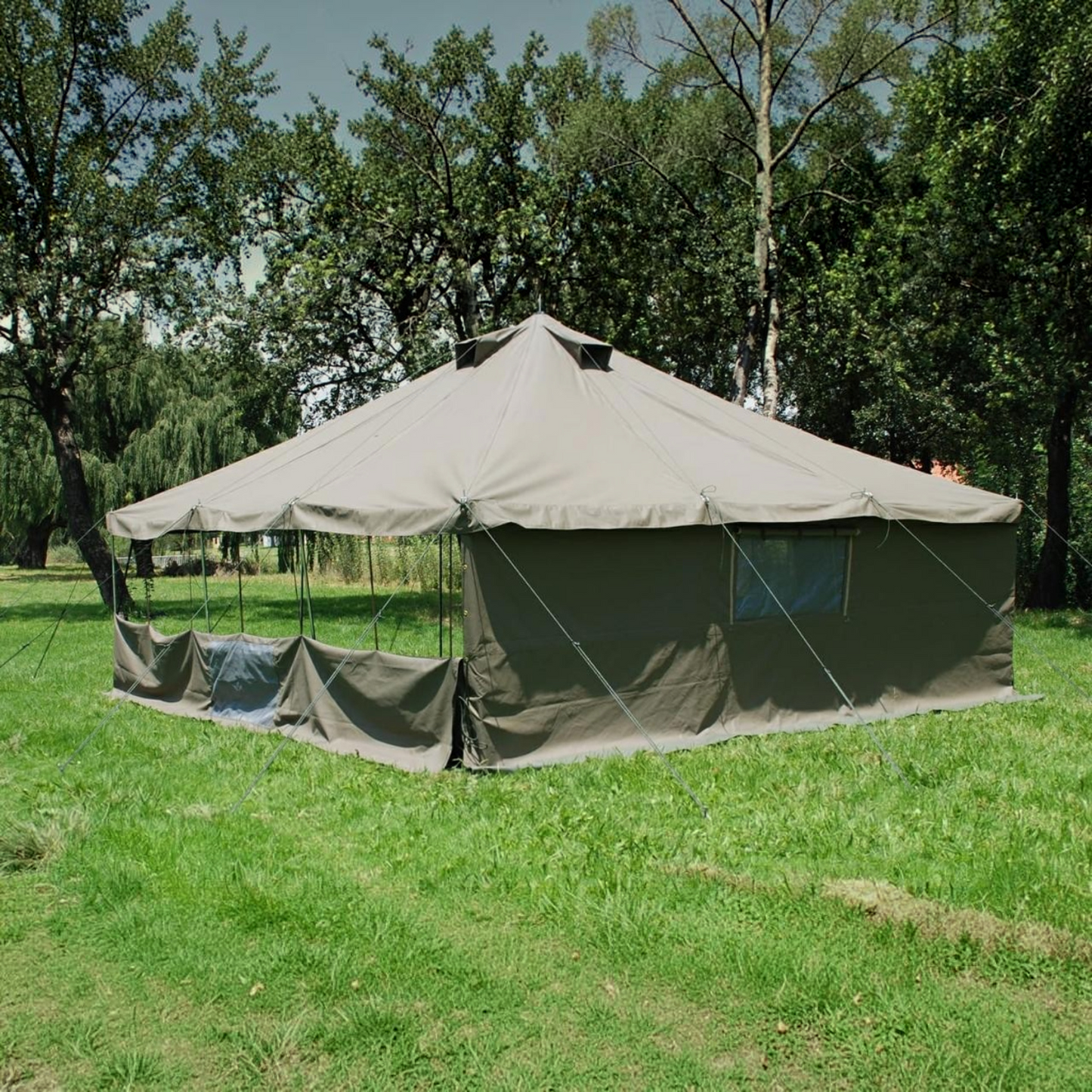
Field Tent - DIY
Field Tent - DIY
Couldn't load pickup availability
Key Features
Savanna Field Tents
Introduction to the Heavy-Duty Military-Style Tents
The Savanna Field Tents are robust, heavy-duty, military-style shelters designed for durability, modularity, and rapid deployment in diverse environments. Often referred to as "General Purpose" or "GP" tents, they are engineered to withstand harsh weather conditions while providing substantial interior space for personnel, command centers, field hospitals, or storage.
These particular models feature a classic, high-peak design with a sturdy external and internal frame system, ensuring structural integrity. They are characterized by their utilitarian olive-drab green color and a design that allows multiple tents to be connected to form a larger compound.
Explanation of Key Features and Components
Based on the visual evidence in the images, here is an explanation of the specific features of these tents:
1. Heavy-Duty Canvas Construction: The tent walls and roof are made from a thick, durable, heavy-duty canvas material. This fabric is typically waterproof, rot-proof, and flame-retardant, making it suitable for long-term field use. The canvas provides excellent insulation, keeping the interior cool in hot climates and warmer in cold conditions.
2. Frame and Support System:
-
External Frame: As seen in image_33.png, the tent utilizes an external metal frame structure (often galvanized steel or aluminum) from which the canvas is suspended. This external frame maximizes the usable interior headroom and floor space by eliminating central poles.
-
Internal Support: Image_35.png shows the interior view of a different, possibly larger, variant. This type uses a combination of perimeter wall poles and a robust central pole or hub system to support the high-peaked roof. The radial support ropes seen in the image help distribute the tension evenly across the canvas.
3. Integrated Ventilation: Proper ventilation is crucial in enclosed shelters. As visible on the roof peaks in image_33.png and image_36.png, the tents are equipped with covered ventilation ports or "vents." These allow for air circulation while preventing rain from entering.
4. Roll-Up Sidewalls for Climate Control and Access: A significant feature of these tents is the ability to roll up the lower section of the sidewalls. This is evident in image_33.png, where the bottom half of the wall has been rolled up and secured, revealing a green mesh or screen underneath. This allows for maximum cross-ventilation during hot weather while keeping insects out. This feature also provides multiple points of entry and exit.
5. Modularity and Expandability: These tents are designed to be modular. The ends of the large rectangular tent in image_34.png show open entryways designed to be linked with matching openings on other tents. This allows military units or relief organizations to create an extensive, connected network of shelters for various field operations.
6. Setup and Anchoring: The tents require a team for setup, as shown in image_35.png. The frame must be assembled, the canvas draped and tensioned, and the entire structure secured to the ground using guy lines and heavy-duty stakes or pegs, as seen around the perimeter of the tents in the field images.
In summary, these military-style tents are engineered as versatile, field-proven solutions for creating semi-permanent living and working spaces in remote or challenging environments.
For Collection ex works Johannesburg, South Africa
Made to order. Lead time 6-8 weeks
Share